
Hearing Tests in Thornhill, Ontario
Get clear answers about your hearing
Your hearing assessment is an opportunity to understand your hearing and what, if anything, should come next. We combine thorough testing with clear explanation, thoughtful recommendations, and longer appointment times to allow for your questions.
What to expect during your 75-minute hearing test
-
 Step 1
Conversation about your hearing
We understand your unique needs by exploring your hearing history, outlining what you and your loved ones are noticing, and capturing your goals for the assessment.
-
 Step 2
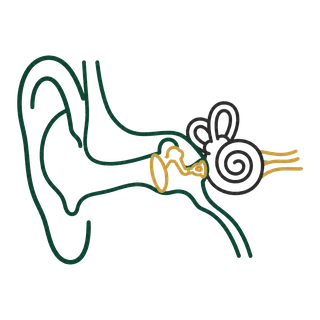
Ear exam
Your audiologist performs a gentle visual inspection of your outer ear, ear canals and eardrums to rule out physical obstructions like wax buildup.
- Otoscopy
- A visual examination of the ear, canal and eardrum to identify concerns such as wax, irritation, or other findings.
- Tympanometry
- A non-invasive test evaluating how sound travels through the eardrum and middle ear system.
-
 Step 3
Speech testing
Your ability to repeat words in quiet and noisy environments is evaluated using calibrated headphones to inform recommendations that optimize success where it matters.
- Speech-in-Quiet
- How speech is understood in ideal conditions, preparing your hearing profile.
- Speech in Noise
- Understanding speech in background noise, giving us a more realistic picture of how you hear in challenging environments.
-
 Step 4
Pure-tone testing
Using calibrated headphones followed by a bone-conduction headband, we measure your ability to hear different pitches to better understand where your hearing is at today.
- Air Conduction
- Measures the softest sounds you can identify across tested pitches.
- Bone Conduction
- Assesses how you hear sound transmitted through the bones of the skull, helping to identify the type of hearing loss.
-
 Step 5
Review and next steps
We explain what the results mean, what options are reasonable and what should happen next. The decision about how to proceed remains yours.
-
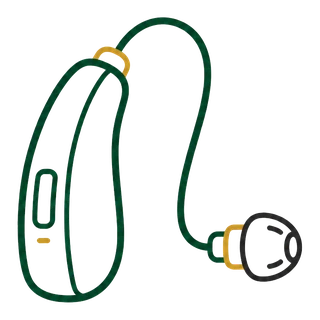 Step 6
Hearing aid demonstration
When hearing aids are warranted, we will offer an in-clinic demonstration* of what hearing aids can sound like, giving you more information to make an informed decision.
*A standard hearing assessment may include a one-manufacturer demonstration. If you want to compare several manufacturers in the same session, the Listening Lab is available as a separate service.
Hearing tests for every age
Hearing can be assessed at almost any stage of life. Baitz Audiology provides comprehensive hearing tests for adults, seniors, children from approximately 4 years of age.
Whether you are booking a hearing test for yourself, a loved one or have concerns about your child’s hearing, speech, or language development, the goal is the same: to get reliable information that's clearly explained.
Children

Adults
Seniors
When should you have your hearing checked?
It's better to be proactive! You don't need to wait until hearing becomes a major difficulty to have it assessed. A hearing test can be helpful whenever you notice a change, someone close to you raises a concern, or you simply want a baseline for comparison over time.
Consider having your hearing checked if you:
- Find conversations harder in restaurants, groups, or background noise
- Feel unusually tired after sustained listening or conversation
- Frequently ask people to repeat themselves
- Hear people speaking but have difficulty making out the words
- Find you are turning up the television
- Feel that people are mumbling
- Notice a difference between your ears
- Experience new buzzing or ringing in the ears
- Have a feeling of pressure, blockage, or fullness in your ears
- Have a history of significant noise exposure
- Notice a change in hearing that has not been previously assessed
How often should you have a hearing test?
There is no one schedule that is right for everyone.
If you have no concerns or significant risk factors, periodic testing provides a useful baseline and makes it easier to identify changes over time. As you get older, or if you are regularly exposed to loud sound, more frequent testing may be worthwhile.
If you already have hearing loss, wear hearing aids, or notice that your hearing has changed, your audiologist may recommend more regular assessments.
For children, hearing should be assessed whenever there is a concern about hearing, speech, language, listening, or development, even if they previously passed a newborn hearing screening.
And at any age, a noticeable change in hearing is a reason to have it checked rather than waiting for your next routine assessment.

Meet your audiologist
Joshua Baitz, M.Cl.Sc., Reg. CASLPO
I started Baitz Audiology to provide hearing care that is thorough, clearly explained, and built around your needs.